DUBAI: The United Arab Emirates is developing alternative routes for energy exports and trade to reduce its vulnerability to the ongoing US-Iran conflict, UAE presidential adviser Anwar Gargash said on Monday.
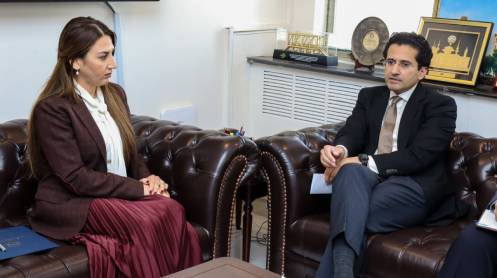
Thank you for reading this post, don't forget to subscribe!Speaking at the Hili Forum in Abu Dhabi, Gargash said the UAE’s energy exports and broader economic activity would not be allowed to become “hostage” to the conflict.
The UAE has been expanding port capacity along its eastern coast while developing pipelines, rail links and alternative trade corridors to maintain the flow of energy exports and commercial activity, he said.
The developments come after the conflict significantly disrupted Gulf Arab states, with Iran launching missile attacks against the UAE and targeting oil tankers in the Strait of Hormuz.
Gargash acknowledged that relations with Iran could eventually improve but warned that rebuilding trust following the attacks could take decades.
He also criticised Gulf Arab states for failing to develop a coordinated response to Iran, saying that shared concerns had not been translated into a unified regional strategy.
Qatar’s Foreign Ministry spokesperson Majed al-Ansari echoed the concerns, saying Gulf countries should not depend solely on their strategic partnership with the United States for regional security.
He stressed that while the presence of international forces and a strategic alliance with Washington remained important, they were not sufficient to guarantee Gulf security.
Iran has followed through on its threat to close the Strait of Hormuz, a critical maritime route through which around one-fifth of global energy supplies normally pass. The disruption has sent energy prices sharply higher and raised concerns over broader global economic consequences.
The future of the waterway has also emerged as a major obstacle in negotiations between Washington and Tehran, mediated by Qatar and Pakistan. Iran maintains that sovereignty over the strait is shared with Oman, a position broadly rejected by Gulf Arab states.
Gargash said freedom of navigation should not be treated as a concession or renegotiated under pressure, arguing that any long-term settlement must provide credible guarantees against further Iranian attacks on Gulf Arab states.
The UAE’s efforts to establish alternative export and trade corridors reflect growing concerns among Gulf producers over the strategic vulnerability of energy shipments passing through the Strait of Hormuz.
By Reuters